How to PR & Market Your Documentary Film

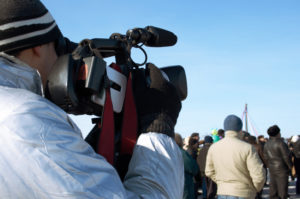
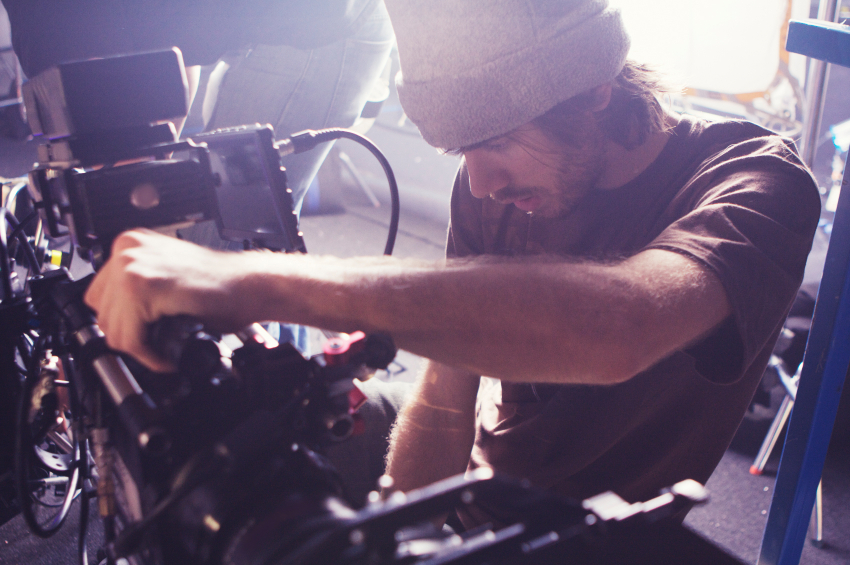
The operator with a videocameraYou’ finished your documentary film.  You’re exhausted but excited.  The long hours and hard work paid off.  You have a finished project you’re proud to show.

So, now what?

If you set up a plan to target distributors and market your film to the public, you’re ahead of the game.

Start implementing your plan and keep in mind it’s a living document and one that needs to be able to shift and modify as you move forward.

If you don’t have a plan in place, create one now.

There are quite a few different approaches you can take.  Your main objective is to build bridges between your film, the media, the public, distributors, influencers, you various target markets, etc.

To start you want to make sure you:

1 Have a website.  It doesn’t have to be elaborate, but does have to have a good clean look.  You want it to convey the message and the feel of your film.  You also want it to showcase you as a filmmaker.

2 Create a blog.  This can be a great way to connect with the public and create a following.  Document the making of your documentary.  Share your triumphs and your trials.  Be transparent.  Create a compelling narrative.

3 Develop a social media presence. You don’t need to be on every social media platform, but you do want to pick two or three and consistently update them.  If you’re launching a PR campaign, be sure and post and highlight any media coverage that you garner.

4 Launch a public relations outreach for both you and your film.  This is the strongest way to establish your brand.  PR offers you the validation and credibility of being featured in the media.  Target media that covers the issues your film raises, but don’t simply think in narrow terms.  Try to broaden your media bull’s-eye as much as possible.  Think of the various stories you can pitch that have to do with your film, your journey as a film maker, your filmmaking process, etc.  What stories can you pitch to the large mainstream publications, what stories can you pitch to blogs, entertainment-oriented media, and trades?  Are there newsletters that would be appropriate to target?  If possible bring a professional on board to work with you who knows the media, has the contacts and has experience successfully placing stories in the press. You might find it difficult to get the type of coverage you need trying it on your own.

5 Create an impactful trailer that you can use as a pitch tape and calling card for potential distributors.

6 Make a list of all of the venues where you could possibly show your film.  Be creative.  Start with the obvious and then drill down.  Could your film be shown at schools or colleges?  Is there a tie-in with charities or foundations?  Could it be shown in churches?

7 Submit your film to appropriate film festivals.  And make a list of festivals that could be worth attending even if your film will not be screening.  Do some research.  The can be opportunities to meet with distributors, buyers, investors, influencers, media, etc.

8 Arrange a private press screening of your film.  This doesn’t have to be elaborate, but if you can arrange to premiere your film and make that an event.  If you showing at a festival, you can make that your premiere.  Otherwise look at four-walling a small theatre.  You can invite the media, distributors, influencers, investors and your target market.  It can help create a buzz and build awareness of you and your film.

The bottom line is that there is quite a lot you can and should do to make sure your documentary is given every chance that it needs to be successful.

Start now!

PR For Filmmakers

Promoting Your Movie via the Media

You see your job as director or producer (or both) but not as marketer.  Well, if you want to maximize your chances of getting your film out there, it’s time to get comfortable with this new role.  Whether you promote and PR your film on your own or hire a firm to do it for you, you can effectively create a buzz for your film and you will maximize your chances of building your audience and fan base.

By actively promoting your film, you’ll maximize your chances of:

Using PR and media relations to establish your film and/or production company is the most validating and legitimizing route.  By appearing in the media you establish yourself as a presence and a player in the industry.  You gain the validation of be covered by and featured in the news.  I’ve written other articles on how to launch an effective public relations campaign, which would be worth reviewing.  Your best bet is to bring a company or consultant on board that has experience and can work with you to launch an effective campaign.  If that’s not possible, do some homework, learn the process and give it a stab on your own.

Along with launching a PR and media relations outreach consider adding the following:

There is quite a lot you can do to help market, publicize and promote your film.  I believe that the most effective approach is to combine blogging and social media marketing with  traditional PR and media relations.  As a filmmaker, this is an exciting time.  Now more than ever you can take steps that can help ensure the success of your projects and your careers.  Be bold.  Go for it.
See you at the movies.

Copyright © Anthony Mora 2014


Creating Your PR Gameplan

man drawing business conceptWhat makes or breaks most films?

It’s the buzz, the anticipation, the excitement (or lack of it).

And nothing can create that buzz more effectively than the media.

Being featured in the media, gives you the validation and credibility of being newsworthy.

If you work it right, media begets more media and the snowball effect begins to kick in.

When Should You Launch a PR campaign?

Now!

Don’t make the mistake of starting your PR campaign once you’ve finished your film, or after you’ve submitted and been accepted by a festival.

You need to start planning your PR strategy on day one.

You need to make the public relations cost as basic a budget item as the cost of your camera or lighting, or any of the other essentials.

So where do you start? You create a comprehensive PR gameplan which includes:

♣         Creating stories that grab the media’s attention

♣         Developing a local, regional and national PR strategy

♣         Developing your press releases

♣         Creating your various media list

♣         Developing your media follow-up strategy,

♣         Outlining the protocol for the media follow up calls,

♣         Utilizing your media in your overall marketing campaign

♣         Melding your social media outreach with traditional PR

There is a lot to cover here. What you want to do is take it in sections and take your time putting your gameplan together. If you can enlist the help of a public relations firm, or PR consultant, you’re ahead of the game, but if not, don’t let that stop you. Do your homework. Do some research (studying articles on this blog can help). Just writing down your gameplan puts you ahead of the game. You can now see what needs to be done, figure out a sequence and begin to actively develop your PR outreach strategy.

Copyright © Mora Communications 2014

PR for Filmmakers Workshop, part of the AOF Film Festival

pr for filmmakers

Calling all Filmmakers: 

On August 26th I and my associate, Verena King @VerenaKingPR (who will be focusing on social media), will be giving a PR for Filmmakers Workshop, a part of the AOF Film Festival. 

Is this important?

It is if you’re a filmmaker.

Why?

Because, you want your film to succeed.

What makes or breaks most films?

It’s the buzz, the anticipation, the excitement.

And nothing can create that buzz more effectively than the media.

An effective PR campaign (or lack of one) can make or break your film

Being featured in the media, gives you the validation and credibility of being newsworthy.

If you work it right, media begets more media and the snowball effect begins to kick in.

When should you launch a PR campaign?

All together...

Now!

aof festDon’t make the mistake of starting your PR campaign once you’ve finished your film, or after you’ve submitted and been accepted by a festival.

You need to start planning your PR strategy on day one.

You need to make the public relations cost as basic a budget item as the cost of your camera or lighting, or any of the other essentials.

So, have you or your film been covered in the media?

If not, why not?

And if your answer is yes, have you utilized your media coverage for maximum effect?

Do you have a comprehensive PR gameplan?

Does your gameplan include the following?

These are just a few of the topics we’ll be covering at this essential nuts and bolts PR workshop.

PR for Filmmakers is a unique workshop designed specifically for producers, directors and filmmakers.  Focusing on how to effectively promote and market your films, the workshop will cover a number of topics including how to develop stories and pitch ideas, how to write a press release, how to build a media list, how to effectively pitch the media, the difference between the trades and mainstream media pitches, and how to meld your traditional media and social media outreach.

The workshop is designed to help filmmakers build their brand and create a buzz via the media to reach their audience, influencers, investors, distributors and other appropriate opportunities.   At the end of the workshop, filmmakers who wish to participate will be allowed to give a 30-second pitch.  If your pitch is chosen as the most effective (a subjective call by Anthony), you will win a free 90 minute consultation with Anthony Mora, along with a press release, pitch and targeted media list.

The PR for Filmmakers Workshop will be held in Monrovia at the Krikorian Premier Theaters in the filmmaker It runs 11:00 Am -1:00 PM.  The Workshop is free for AOF 2014 Accepted Filmmakers and Writers. There is a $25.00 charge for all others.

Copyright © Mora Communications 2014

Want Your Film to Succeed? Read On (PR Tips for your Film & More)

film successIt used to be that a film company would spend the same amount of money marketing a film as it would spend producing a film.  The P&A, or prints and advertising would include the prints, advertising, PR, screening, basically anything that had to do with getting the film out to the public and creating a buzz.

In this digital world the word “prints” is rather rapidly fading from our vocabulary, but everything that falls under the advertising umbrella is still mandatory.  And now you can add a host of other must-haves such as a website, social media strategy, EPK (electronic press kit), a blog, etc.

The trouble is that most producers in the world of independent filmmaking seem to factor very little of the above into their overall budgets.  Oh, they’ll generally build a website, maybe put a few trailers on YouTube, do a minor Facebook outreach and then…. Wait.

What they don’t do is start by creating an initial budget that includes, at the very least, a web designer/webmaster, a graphic artist, a savvy social media consultant, and an experienced PR firm, or PR consultant.

What they don’t do is what you want to make sure you do.

You want to cover all of your basis from day one, since, chances are you’re not going to do this after the fact.  After you’ve produced your film, unless you’ve budgeted and carefully prepared, your money is spent, you’re in a rush to get it out there, you’re exhausted and the last thing you want to do is come up with a savvy, creative marketing approach.

At that point, in all probability, you’re going to throw up a website, cut a fast YouTube trailer, send out some tweets and Facebook posts, write and send out a novice press release (with no strategy or follow up).  If you’re smart you’ll make sure you’re listed on IMBD and that you have your own Wikipedia page.  Then, thinking you’ve covered all the basis, you’ll kick back and wait.

Then…

you’ll wait some more.

You’ll then either come to the conclusion that no one understands how brilliant your film is and the world’s just not ready for you yet, or that marketing and PR are a waste of time.  They must be.  No one responded.

The truth is, you didn’t prepare, you didn’t give marketing or PR a chance and you didn’t give your film a chance.  You could have a gem, a real hit on your hands and never know it.

Now the good news.

You can do it differently.  It’s best if you plan for all of the above at the pre pre production stage of your film, but, no matter what stage of the process you’re in, you can stop review the situation, develop a new gameplan and prepare for success.

In my PR for Filmmaker workshops, I cover all of the basics that you need to know to help your film succeed.  If you can’t make it to one of workshops, follow our blog.  If you have questions, shoot us an email.

As a wise man once said, knowledge is power, so learn as much as you can, do your preparation and give your film a real shot at success.

Copyright © Mora Communications 2014

Film Publicity

Do Not Read this Article - If You Want Your Film to Fail

Why filmmakers make filmsLet’s start with a multiple choice pop quiz that includes just one question:

Why do filmmakers make films?

1)     Because they’re bored and have nothing else to do.

2)     Because they have too much money and don’t know how else to spend it.

3)     Because they want to watch it in their room, by themselves, on their laptop, over and over.

4)     Because it’s a fun, albeit expensive, way to meet people and maybe find a date.

5)     Because they have a story they want to tell and share with as large an audience as possible.

If you answered 1, 2, 3, or 4, stop reading his article right now and see what’s playing on Bravo.

If you answered number 5 and you indeed are a filmmaker, or interested in becoming one, read on.

In all honesty, I don’t think there are many filmmakers that set out with the objective of having their film fail.   They’re not rooting for it to be seen by only a handful of family and friends, or spend its life in distribution limbo or be remembered only as a side note, they can say, yeah I made a film once.

But the way many filmmakers act and the decisions they make or don’t make has to make one wonder.

Without marketing and public relations there is no film success.

Period.

It’s a given.

It’s a truth, set in stone and yet it’s something that many filmmakers ignore or avoid or in some case simply forget.  They are so focused on getting their film made that they forget why they are making their movie.

Understand that as a filmmaker marketing is an integral part of your job description.  It isn’t simply something you could do.  It isn’t a choice, isn’t an option

If you want your film to succeed setting up a marketing plan that stats when you’re writing your first draft is something you will do.

Start outlining your public relations campaign, as soon as you start working on your project.  Whether at the writing or preproduction stage, start thinking about the PR angles and how you can best utilize them when ready

Once you have your stories map out your outreach, if you can hire a PR firm to launch a campaign, or for some basic consultation, that will make your life a heck of a lot easier, but if your budget doesn’t allow it, don’t let that stop you.

Make a list of your possible stories or media angles.  Successful PR is successful storytelling.  It’s an art.  One angle could be the film itself, the subject matter, another could be your journey to making the film, and another could be the cast members.  No matter how crazy some of the ideas might sound, write them down.  You never know where that one story that hits the right nerve will come from.

If you’re adept at writing, put together a one page press release.  If you’re not, find someone who can and have him or her write one for you.  Keep it at one page.

Next put together a list of your main target media outlets.  Now contact them.  Be aggressive, but not pushy.

Don’t wait for others to market your film.  It’s up to you to take action.  Either bring a professional on board or start your own marketing outreach.

You’ll never get where you want to go if you don’t start.

So…

Start!

Action On Film: Both a TV Talkshow and a Film Festival

del westonFor years I had heard good things about Del Weston’s Action On Film International Film Festival and Writers Event (which will be hosted in Monrovia, California this August).  I’d also heard about the launch of Del’s Action On Film TV talk show which goes out nationally via Time Warner Cable, Champion Broadband, PEG Media and the internet.  I’d even booked clients on his show, but, I’d never actually met him.  Well, not long ago that was rectified when I was asked to appear on the show and talk about PR for Filmmakers.

It was a great experience. Del is not only a guy who cares about films, he cares about filmmakers and all of those connected with filmmaking and that shows in his interviewing style.  My mantra to filmmakers is to market their work, publicize their films, build a bridge between their film and the public and Del offers filmmakers the perfect forum.  The interviews aren’t comprised of the canned, expected questions that most interviewers ask.  The questions are thoughtful, insightful, often surprising.  He was kind enough to ask me back to do a second segment and on the second show we talked very little about public relations.  The bulk of the interview was about writing, my novels, plays and how I view life from the perspective of a writer as opposed to that of a PR consultant.

Del, who is a film producer and director, began shooting the thirty minute talk show in early 2013 and after a year of searching for the right combination of hosts, he was joined by veteran character actor Mark Giardino.  Giardino recently directed the new Joe Pesci documentary, Behind The Gate.

These two know moviemaking from the inside out.  That’s important, because here you have a show about film and filmmaking run by two professionals who have been in the trenches.  They don’t just talk about film, they know film.  They’ve made films.  Therefore they not only know the questions to ask, but they can commiserate and empathize with their guests.  They know the nuts-and-bolts of what filmmakers go through.  They know the joys and they know the heartbreaks and they can speak to their guests from that perspective.

For me, what makes this show unique is that it’s not another show where two hosts are reviewing films or simply talking about the top grossing movies of that particular week.  They are talking to filmmakers, actors, directors, producers and others involved in the industry about a host of topics.  They open a window to the world of independent filmmaking which (with all of the changes taking place in the industry) is perhaps more vibrant than it’s been in years, but also more challenging.

To quote Del: “When I first started the AOF, I got filmmakers who had never been in front of the camera.  They had never done interviews and they definitely didn't have the chance to talk about themselves in any meaningful way in front of an audience.  This show belongs to them.  We’re just getting started with this show.  As a companion to our film festival, Action On Film, this is one of the best ways I’ve seen to spread the word about what veteran performers and new talent are up to in the industry.”

And speaking of the Action On Film International Film Festival and Writers Event, it will return to the city of Monrovia CA. for a third season.  The festival which has hosted such stars as Talia Shire, Debra Kara Unger, Robert Loggia, Tom Sizemore and John Savage will mark its tenth season by showcasing nearly 500 films, videos, documentary, experimental and animation projects.

I’ll be writing more about The Action On Film International Film Festival and Writers event in the coming months.  I’ll be offering a PR for Filmmakers seminar at AOF and to learn more about the festival and the workshop, stay tuned.

Check out the Action On Film TV Show at:   www.delwestononfilm.com and The Action On Film International Film Festival and Writers event at: www.aoffest.com

Copyright © Anthony Mora Communications 2014

The Film Festival Marketing Approach

sundance_film_festival_egyptian_theater_slice_01Film festivals are definitely one approach to market and showcase your film and one I would encourage any filmmaker to consider.  But using that as your sole approach can backfire.  Let’s say one of your primary goals is to show your film at film festivals, particularly at the top festivals.  Fine, the film festival route is certainly a viable one when it comes to promoting and marketing your film, but keep in mind that’s not the only route.  Plenty of independent films land a distributor or self distribute and find an audience going different routes altogether.  Regardless of whether you go the film festival route or have another strategy, you should start thinking about your film’s marketing and release strategy as soon as possible.  If you’re smart, you’ll start before the screenplay is finished, certainly before the first frame has been shot.

Remember, the PR & marketing can be the engine that drives the project.  It can open doors to distribution, financing and build your audience base.  Keep your options open every step of the way.  As I mentioned earlier festivals are one approach, but not the only one.  Let’s say  you’re working on a documentary; you have a number of distribution and showing possibilities from the festivals, to theatrical to outside the box screenings at schools, museums, organizations and churches.  Often these types of screenings can run even during a festival showing.

One way festivals can help, is they are great places for forming relationships with others involved in various aspects of the film process.  This can be particularly helpful for producers and filmmakerswho are going to self distribute their film.  Filmmakers now need to take a more active role in the marketing, public relations, and distribution of their films and festivals can definitely help forge important relationships.

But there can also be a downside to festivals.  It’s possible to get locked in the film festival loop and not look at alternative, creative ways to market, show and showcase your film.  Even if your film is accepted to one or more, that in itself does not guarantee your film will succeed. Too many film producers base their entire marketing strategy on being accepted by a festival.  If it turns out no festival bites, which happens a fair amount of time, these filmmakers are left with no alternate strategy.  They are more or less stranded and left with no alternate approach.  You don’t want to find yourself in that position.

My advice is to begin on day one with a PR and marketing strategy that goes forward whether or not your film finds its way to a festival.  Regardless of the direction you choose to take, get your PR and marketing gameplan in place, start your PR outreach and launch your filmmaking journey.

Copyright © Anthony Mora 2013

Cresswell, Jackson. “Sundance London Film Festival is Launching in April 2012.” Collider. 15, Mar 2011. 19 Apr 2013. <http://collider.com/sundance-london-film-festival-2012/>

Filmmakers: Making Marketing Your Top Priority

film-articleThe film festival route is certainly a viable one when it comes to promoting and marketing your film, but keep in mind that’s not the only route.  Plenty of independent films land a distributor and find an audience going different routes altogether.  Regardless of whether you go the film festival route or have another strategy, you should start thinking about your film’s marketing, publicity and release strategy as soon as possible.  If you’re smart, you’ll start before the screenplay is finished, certainly before the first frame has been shot.

Remember, the PR and marketing can be the engine that drives the project.  It can open doors to distribution, financing and build your audience base.  Keep your options open every step of the way.  For example, if you’re working on a documentary, you have a number of distribution and showing possibilities from the festivals, to theatrical to outside the box screenings at schools, museums, organizations and churches.  Often these types of screenings can run even during a festival showing.

Festivals can be a great place for meeting distributors and forming relationships with strategic partners.  This can be particularly helpful for producers and filmmakers who are going to self distribute their film.  Filmmakers now need to take a more active role in the marketing, public relations, and distribution of their films.

But there can also be a downside to festivals.  It’s possible to get locked in the film festival loop and not look at alternative, creative ways to market, show and showcase your film.  Regardless of the direction you chose to take, get your PR and marketing gameplan in place at the start of your filmmaking journey.

Copyright © Anthony Mora 2013

Producing A Film? Create Your PR Plan First

Making a film can be a magical experience, but  many filmmakers get so excited about and engrossed in the making of their film that they forget producing their film is only step one.  Actually the production of your film should be pretty far down the line in your film to-do list.  Particularly when it comes to new filmmakers, the excitement of making a film, and all that is involved in scripting, pre-producing, casting, production and post production, has a tendency to become all consuming.  Creating the film becomes everything.  But here’s the question, what are you going to do once your film (filled with joy, enthusiasm and dreams as well as blood sweat and tears) is completed.  How are you going to get your film, promoted, marketed, distributed?  How are you going to build that bridge between your finished product and your audience?

If this article were actually a script, we’d be having a flashback sequence here.  We flash back to the incarnation of your project.  We would fade back to before you edited, shot, cast, or wrote your film and add a new focus to the process.  In this sequence your new flash back approach in the past would change your future.  You’d figure out a game plan outlining how to PR, promote and market your film.  Your new public relations plan would act as a guide, as a roadmap as you moved forward in your filmmaking process.  It would be a bridge-building process between you, your audience, distributors, potential investors and influences.  It would be the focus that helped insure your film would have a strong shot at succeeding.

So many filmmakers come to me after they’ve finished their film.  They’ve been so wrapped in the process and the project has inevitably gone over budget.  They didn’t consider a marketing campaign before they started production and now have very little money left for marketing.   There’s often little I can do for them at that point.  Those I have most success with either start with me during pre-production, or from the start realized that marketing was an essential part of the game plan and kept that in mind during the production process.

Ideally you want to start promoting your film and creating a buzz online and in the media before you finish shooting or editing your project.  A well thought out media relations and social media campaign can serve you in a number of ways.  Keep in mind, depending on your needs; you are going to be addressing different audiences with your media relations campaign.   One outreach could be directed to the general public, another to a more targeted grout of viewers, another to distributors and still another to possible investors.  You can also start creating a buzz for upcoming projects while promoting your current film.

So dive into your film project.  Make the very best film you can.  But be smart about it.  Make a PR and marketing campaign an essential part of your film’s game plan.  You don’t want to end up with a film that a few of your friends see, or gathers dust in your home, or gets submitted to a few film festivals and then fades away.  You’ve put your heart, soul, time and money into your film project.  You now owe it to the film and to yourself to give it a chance to succeed.

Copyright © Anthony Mora 2013